
Investigate of Biological and Manure Effect on Decreasing Demand Chemical Fertilizer in Hyssopus Officinalis L
Received Date: September 05, 2024 Accepted Date: October 05, 2024 Published Date: October 08, 2024
doi:10.17303/jmph.2024.3.204
Citation: Amirabas Rohi, Abolfazl Naeimi, Gholamreza Naderi Broujerdi (2024) Investigate of Biological and Manure Effect on Decreasing Demand Chemical Fertilizer in Hyssopus Officinalis L. J Med Plant Herbs 3: 1-12
Abstract
Phosphor, after nitrogen, is considered as one of the highly consumed elements for the herbs. This element is involved in all the biochemical process, energy and message transferring mechanisms, being among the nutritious substance for the plants that has influence on their growth and performance. Shortage of this element, currently, is compensated by applying chemical fertilizers. The chemical fertilizers have harmful impact on the environment and decrease the quality of the agricultural products. This test was carried out in order to analyze the phosphate solving bacterium type Bacillus Lentus (p5) and Pseudomonas Putida (p13) as the organic fertilizers and chemical phosphorus from the super phosphate Triple source as the chemical fertilizer. The effect of the two phosphorous factors (phosphor solving bacterium, chemical phosphor) and the medicinal herb "Hyssop" was analyzed by applying a factorial test as a complete random blocks in three times during the agricultural year of 2009 in Arak. The effect of the main two factors and their interaction with certain strains such as the height of bush, length of flower branch, number of flower branch, wet shoot yield, dry shoot yield, seeds yield, percent of essential oil, yield of essential oil per hectare, was meaningful. Of course, non-meaningfulness of the effect of the phosphor releasing bacterium was examined in certain strains such as essence percentage and the results indicated that the application of phosphate solving bacterium have a meaningful effect on the studied strains, leading into increase of the performance elements parameters, in particular the dry shoot yield in phosphor releasing bacteria treatment alone, and application of the phosphor releasing bacteria with 115 kg phosphate fertilizer, and yield of essential oil per hectare in 90kg of phosphate fertilizer in the treatments including phosphate solving bacterium, comparing with the chemical treatment and Contour, was meaningfully dominant. There was at least 50% decrease in consumption of the phosphate chemical fertilizers of super phosphate Triple source by applying phosphor releasing bacterium.
Keywords: Phosphate Solubilizing Bacteria; Phosphor; Hyssop; Yield and Essence
Introduction
Phosphor is one of the main elements needed for the herbs. This element is involved in all the biochemical process in the energizing compounds, as well as in the energy transferring mechanisms. Additionally, phosphor is a part of the cell protein, playing a particular role as a part of the cell protein, cell membrane, nucleosides (RNA, DNA), which are responsible for reproduction and growth; despite its role in the herbal process and combination, the amount of phosphor in the herbal tissues is less than 0.1% of nitrogen.
The damages resulting from consumption of the chemical fertilizers: reduction of the quantity and quality of crop – Boron aggregation, cadmium, and other heavy metals in the plant – reduction of absorption of copper, iron, and other micro elements by the root – destruction of the soil structure [1-3].
Organic/microbial fertilizers include (solid, liquid / semi solid) substance that contain one or several types of certain micro-organisms, which through supplying part of an element needed for the plant or by generating stimulant growth substance, help better growth of the plant [4].
Organic fertilizers
Bacterial organic fertilizers: e.g. pospho bacterium; Azotobacter; Azosperillium; Rhizobium
Fungus organic fertilizers: e.g. Mycorrhiza
Algae organic fertilizers: e.g. Green Alga
Acomiset organic fertilizers: e.g. Frankenia
The fertile organic fertilizer applied on the project is the result of 8 year of research in Iran. This fertilizer contains two kinds of phosphate solving bacterium of Bacillus lentus (p5) and Pseudomonas putida (p13) that respectively using two mechanisms of secretion of organic acids and phosphates enzyme leads into analyze insoluble phosphorus compounds and consequently its absorbability to the plant. These bacteria are able to bear a wide range of PH between 5 to 11 and salinity up to 3.5% [5-7].
Researches carried out: In a test Rhizobium and phosphate solving bacteria were mixed and inoculated into the chick pea seeds. The results show increase in the number of seeds, general growth and chick pea performance indices [8].
Inoculation of the chick pea seeds with the phosphate solving bacteria and Rhizobium contributed to increase in the performance components and chick pea performance [9]. A study was carried out on 2 zones in Spain in order to find a suitable organic fertilizer for chick pea cultivation. Examination of the gathered samples' DNA indicated that these bacteria belonged to two types of Pseudomonas and Meso Rhizobium. Farm and greenhouse tests were applied on the chick pea growth for inoculation of each of such bacteria and / or a combination of both bacteria. Under greenhouse condition, inoculation with Meso Rhizobium bacterium, the maximum dry substance of the aerial organ, as well as inoculation with the Pseudomonas bacterium, increased the performance of the dry substance of the aerial organ up to 14% in comparison with the Contour. Under farm condition, inoculation with Meso Rhizobium bacterium and/or a combination of both bacteria, we gained maximum weight and number of wet seed. In inoculation of the seeds with two types of bacteria (Pseudomonas and Meso Rhizobiu) of these bacteria, application of incremental effects on each other increased the seeds performance by 52% [3]. A test was carried out at the Nancy Biological Center of France to study the application of the phosphor releasing bacteria on maize. In this study, the maize plant was cultivated in a pure growth media with sandy soil with the amounts of 0, 5, 15 and 25 mg/kg soluble phosphor and insoluble mineral phosphate to the same amount, and then the phosphor releasing bacterium was added to the growth media. Maximum plant growth was realized in presence of 5 and 15 mg per km of soluble phosphor, which indicates low phosphor released by bacteria [10]. In a test, the effects of the phosphate solving microorganisms on wheat was examined in Mali, and it was found that by combination of phosphor solving bacteria and fungi Aspergilus and Penicillium with the mineral phosphate, maximum phosphor density and plant performance was gained [11]. Over an examination, 111 kinds of bacteria were extracted from Rapeseed, out of this amount of bacteria, only 9 of them were able to release phosphor. These bacteria contributed to increase in the height of bush, number and weight of the sheath of Rapeseed [12]. In an examination carried out at the agricultural research centre of New Delhi, the effect of combined inoculation of Azosperillium and phosphate solving bacteria (Bacillus and Pseudomonas) with the nitrogen chemical fertilizer and phosphate soil on the performance and contents of the nutrition matterial of sorghum was studied. The results indicated, the performance of seed, dry substance, nitrogen and phosphor contents with combination of organisms had increase in comparison to each organisms [13]. In an examination, the effect of phosphate and the phosphate solving bacterium on the production of Cairo clover was studied. This examination was carried out during 1997-1999 including 6 levels of phosphor and inoculation of seed clover with Pseudomonas. The combination of the biennial examinations indicated the amount of green provender and the performance of the dry substance increased by application of 60g of phosphor per hectare and maximum raw protein by application of 100kg phosphor per hectare was gained. Inoculation of the seeds of clover with bacterium every 2 years caused a meaningful increase in the performance. In addition, the average performance of the green provender, dry substance and protein had respectively 7.19%, 9.2%, 11.7% increase in comparison to the seeds inoculation with bacterium. The study on the interaction of phosphate levels and phosphate solving bacterium indicated that application of 60g of phosphor per hectare with phosphate solving bacterium had maximum performance of the dry substance and the green provender.
The medicinal herb “Hyssopus officinalis” is a perennial shrub plant. The origin of this plant has been reported “Asia Minor”, growing from the Caspian Sea to the Black Sea, and the sandy area of the Mediterranean Sea as well. This plant possesses a direct root with plenty of branches; the stem of this plan is square and direct, its height is 50 to 70cm. The length of the leaf of Hyssop is 2 to 4cm, and its width is 0.5 to 1cm, which rests along the stem (as the shape of cross). The flowers of Hyssop are white – pink – blue and mixed colors; the amount of essence on the vegetative structure of Hyssop varies between 0.3 and 1%, and the maximum amount of it is in the head of flower branch. The key compounds of the essence are 50% of pinocamphone; other key compounds are alfa and beta pinene, camphone, myrcene – terpineol and thujene [3,14,15].
Growth Periods of Hyssop
Seed cultivation until greening (19 days);
Greening until budding (generic buds – from 60 to 70 days);
Beginning of flowering (since budding) 35 days;
Full flowering until seed formation (40 days);
Seed maturing until full drying (10 to 12 days).
Substance and Methods
This examination has been carried out in the agricultural year 2009 on a land with area of 2000m in Arak (km10 of Arak – Khomein road) on a farm with geographical coordinates: latitude: 34º- 5', longitude: 49º- 42', and height of 1787m above the sea level.
Land Preparation for Cultivation
On 11.03.2008, the suitable land was chosen and after preparation of the land the seeds were planted in the plot on 30.04.2009. The depth of seeds planted on the farrow is considered 1 to 2cm. The intervals between bushes are considered 40cm. Generally, the number of bushes on each plot is considered 50. Based on the soil test carried out on the nitrogen fertilizer flied is considered 150kg per hectare (for each plot equally 120g) and potassium fertilizer (potassium sulfate) 100kg per hectare. Of course, in the organic treatments, the seeds before being planted, they were saturated with Component of material design Phosphate solubilizing bacteria (psb) as per the prescribed method. Sampling for measuring the physiological procedure was commenced 25 days upon greening and was repeated once every week. Sampling was carried out in such way: two side lines were removed from each plot due to marginal impacts, and after removing one bush from the three middle lines (from both ends of the cultivation line), 6 bushes was picked from each plot for phonology and 10 bushes were sent to the lab to measure the percentage of the essence (quantitative).
Strains Pertaining to Performance and its Elements
Percentage of green crop, biological performance, height of bush, number of flower branch, flower color, length of flower branch, wet weight of aerial organ, dry weight of aerial organ, weight of 1000 seeds.
Morphological strains of Hyssop: height, index of the leave level LAI.
Strains pertaining to the quantitative performance of essence: percentage, performance.
Statistical calculations: statistical analysis of the lab data based on factorial as a complete random block and comparing their average by (Duncan test), analyzing the data using SAS software, drawing all the graphs, such as column charts, growth curves using Excel.
Characteristics of Factors and Experimental Model
This test was carried out in 2009 in the form of factorial as a complete random block in three periods for one agricultural year in spring.
Studied Treatments are:
1st factor: chemical fertilizer, for which fertilizer super phosphate Triple 50٪ (p2O5) has been used (at level 5):
P0: not applying phosphate fertilizer + 348g urea+100g potassium sulfate
P90: 90kg/h pure Phosphate → plot / 144g super phosphate Triple + 348g urea + 100g potassium sulfate P115: 115kg/h pure Phosphate → plot / 184g super phosphate Triple + 348g urea + 100g potassium sulfate
P140: 140kg/h pure Phosphate → plot / 224g super phosphate Triple + 348g urea + 100g ( potassium sulfate
P165: 165kg/h pure Phosphate → plot / 264g super phosphate Triple + 348g urea + 100g ( potassium sulfate)
2nd factor: phosphate organic fertilizer (PSb) = Phosphate Solubilizing at 2 levels;
(Phosphate-solubilizing bacteria) = PS1 →with Phosphate-solubilizing bacteria
(Phosphate-solubilizing bacteria) = Psb → without Phosphate-solubilizing bacteria
Conclusion and Discussion
Among the treatments (figure 1), P140PS1 with an average 245.75kg per hectare had maximum seed performance and P0PS0 with 208.44kg per hectare had minimum seed performance. Results show that mixed application of the phosphate organic fertilizer with phosphate fertilizer has lead into increase in seed performance comparing with the phosphate fertilizer.
There is no meaningful difference between the averages with same letters.
Among the treatments (figure 2), P90PS1 with average 0.77% had maximum percentage of essence and P0PS0 with 0.53% had minimum percentage of essence. Results show that mixed application of the phosphate organic fertilizer with phosphate fertilizer has lead into increase in the percentage of essence comparing with phosphate fertilizer. This increase had equal performance at different levels, therefore the interaction between the agent of various quantities of phosphate fertilizer and the agent of the phosphate solving organic fertilizer have no meaningful difference.
Among the treatments (figure 3), P90PS1 with average 3.505kg per hectare had maximum essence performance and P0PS0 with 1.805kg per hectare had minimum essence performance. Results show that mixed application of the phosphate solving organic fertilizer with phosphate fertilizer has lead into increase in the essence performance comparing with phosphate fertilizer. This increase had equal performance at different levels, therefore the interaction between the agent of various quantities of phosphate fertilizer and the agent of the phosphate solving organic fertilizer have no meaningful difference.
Figure (4) shows the change process of the index of leave surface at 2 levels of application and non-application of the phosphate solving organic fertilizer in which the maximum index of the leave surface is related to application of the solving organic fertilizer amounting to 4.6 after receiving 1390 degree per day. First for growth, the index of the leave surface in Contour treatment was better than application of phosphate solving organic fertilizer, but gradually the index of the leave surface increased more than Contour treatment, and maintained its dominance till the end of the process. By application of the agent of phosphate solving organic fertilizer, the index of the leave of Hyssop increased. According to this application, the agent of phosphate solving organic fertilizer influenced on the index of Hyssop leave; and this organic fertilizer could be used by itself or with phosphate fertilizer. Also, applying 9% of phosphate solving organic fertilizer increased the leave surface index after reception of 1390 degrees per day.
Figure (5) indicates that application of phosphor releasing bacteria and/or organic compounds through modification of plant's nutrition, it could influence on the growing process of plant. Phosphor releasing bacteria affect the plant's vegetative grow via facilitation of feeding and phosphor absorption, leading into expansion of the aerial organs, in particular the leaves [16].
Also, [17] after studying on tomato came to the conclusion that inoculation of Azotobacter and/or Mycorrhiza emerged positive and meaningful maize leave surface index.
[18] Declared that reaction of the plant's leave surface against higher phosphor is of great importance; greater leave surface means greater abruption of the sun radiations and increase in formation of photosynthetic and dry substances, which under phosphor shortage, application of phosphor releasing bacteria could help removing this defect.
Findings of variance analysis (table 1) indicate that there was no meaningful difference among the blocks in terms of examined strains, except for height of bush and length of flower branch. There were many meaningful differences among all the strains (α = 0.01). Except for the essence percentage that had meaningful difference at (α = 0.05).
Among the different quantities of phosphate fertilizer (factor A) in various strains, there was a meaningful difference at (α = 0.01). Except for the essence percentage that had meaningful difference at (α = 0.05). Among the different quantities of phosphate solving fertilizer (factor B) in various strains, there was a meaningful difference at (α = 0.01). Except for the essence performance that had meaningful difference at (α = 0.05) and there was no meaningful difference in essence percentage.
Study on the interaction (between the agent of various levels of phosphate fertilizer and the agent of the phosphate solving fertilizer) in different strains show that there was meaningful difference among the strains of flower branch length, number of flower branch, performance of wet shoot yield of aerial organ at (α = 0.01), as well as the height of bush and performance of Dry matter of aerial organ at (α = 0.05). There was no meaningful difference in the seeds performance strains, essence percentage and its performance (table 2).
Findings of Examinations
Application of phosphor releasing bacteria could have a meaningful effect on the strains of bush height, length of flower branch, number of flower branch, seeds performance per hectare, performance of wet substance of aerial organ, performance of dry substance of aerial organ, as well as essence; of course, meaninglessness of the effect of phosphor releasing bacteria in these strains indicates high efficiency of these bacteria and their competitiveness with phosphor chemical sources. By application of phosphor releasing bacteria, the consumption of phosphate chemical fertilizers (Triple phosphate super) had a considerable reduction. As shown in the examination of treatments and strains, in most of the cases phosphor releasing bacteria could supply the need of plant to phosphor and increase its performance. In addition, the best result was obtained by combining the phosphate organic fertilizer with 90 to 140 kg of phosphate fertilizer per hectare.
- Allahverdi A, R Alidoost, Gh Akbari, A Ghasemi (2003) A study on the impact of various quantities of composite fertilizer and recycling of urban garbage, Nitrogen and Phosphor on growth, performance and absorption of phosphor in corn. Excerpts of the 3rd National Conference on Application of Organic Substances and Optimum Use of Fertilizers and Poisons in Agriculture, Agriculture Research and Training Organization, 276.
- Mir Arefin A (1993) Training pamphlet on the soil fertility and fertilizers, Tehran University Press, Aboureyhan Training Complex, 90.
- Salardini A (2003) Soil fertility, Tehran University Press.
- Arzani A (2001) Modification of the Agricultural Plants, Translation, Iran University Press, Isfahan Industrial University.
- Rashipour L, Asgharzadeh N (2007) Cross effects of Phosphate Solving Bacteria and (Bradyhizobium Japanicum) on the growth indices, absorption of nutritional elements in Soya, Sciences and Techniques for Agriculture and Natural Sources.
- Kasraei R (1993) Excerpts on Herbal Nutrition Science, Translation, Tabriz University Press.
- Kianirad M (1995) Examination of Phosphate Solving Micro-organisms and their effects on reduction of the use of phosphorous fertilizers in Soya cultivation, Tehran University – Faculty of Agriculture.
- Holford ICR (1999) The high and low- energy phosphate absorbing surface in calcareous soils. Aust J.soil Res. 35: 227-39
- Gupta CR, singh PN, singhh vk (1991) Effect of planting date on yield components of potato. 13: 541
- Laheurteute, Berthelin (1988) Effect of a phosphate solubilizing bacteria on Maize growth and root exudation over four levels of labile phosphorus, 105: 1.
- Babana AH, H Antoun (2006) Effect of tilemsi phosphate rock solubilizing microorganisms on phosphorus uptake and yield of field grown wheat (Triticum aestivum L.) in mail. Plant and soil. 287: 51-8.
- De freitas JR, MR Banerjee, JJ Germida (1997) Phosphate-solubilizing rhizobacteria enance the growth and yield but not phosphorus uptake of canola (Brassica napus L.). Biology and fertility of soils. 24: 358.
- Algawadi AR, AC Gaur (1992) Inoculation of Azospirillum brasilense and phosphate-solubilizing bacteria on yield of sorghum (sorghum bicolor L-Moench) in dry land. Trop Agric. 69: 347.
- Omid Beigi, Reza (1990) Production of Medicinal Herbs, Third edition, Astan-e-Ghods Razavi, 397.
- Sefidkan F, Sharifi Ashourabadi E, Lebaschi MH, Mirza M, Ebrahimi A, Jaimand K, et al. (2008) Guidelines for Medicinal Herbs, Forests and Pastures Institute of Iran.
- OztUrk A, O.ca"glar, F Sahin (2003) Yield response of wheat and barley to inoculation of plant growth promoting rhizobacteria various levels of nitrogen fertilization.J.plant Nutr.Soil Sci. 166: 1-5.
- Modaihsh S, WA Mustafa, AE Metwelly (1989) Effect of elemental sulfur on chemical changes and nutrient availability in calcareous soils. Plant and soil 116-954-101.
- Rodrigues HR (1999) Phosphate solubilizing bacteria and their role in plant growth promotion, Research review paper.
- Eshsghizadeh A (2007) Application of Organic Fertilizers: Advantages and Limits. Excerpts of the papers of the 2nd National Conference on Ecology of Iran – Gorgan.
- Zaman, Saed (1997) Medicinal Herbs, Methods for Cultivation and Reaping, Ghoghnous Press, 367.
- Vasileva MR, Acton JM. Barea, NV Vassilev (1999) Rock phosphate slubilizition by free and ercapsalated cells of tarwia lipolytica.
FIGURE 1
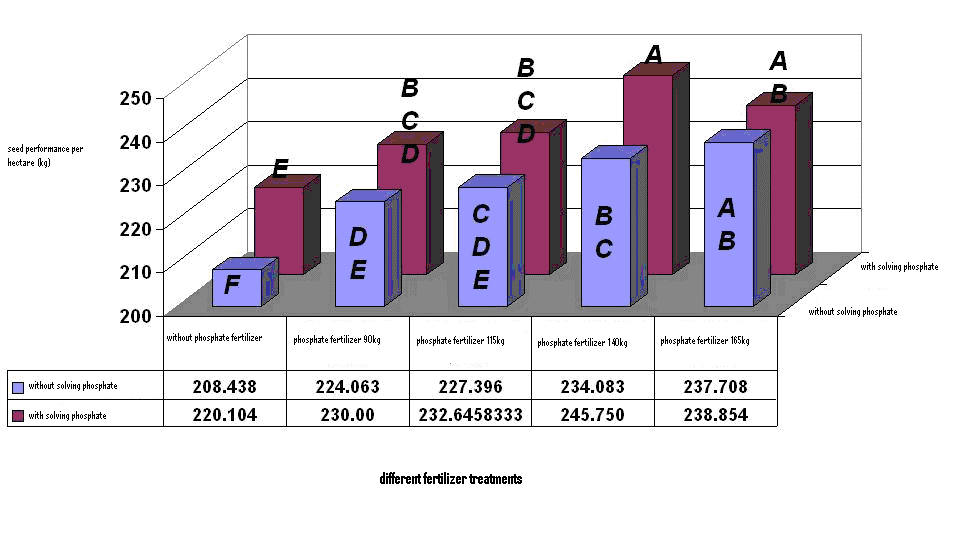
Figure 1: Comparing the average seed performance in different treatments in Hyssop
FIGURE 2
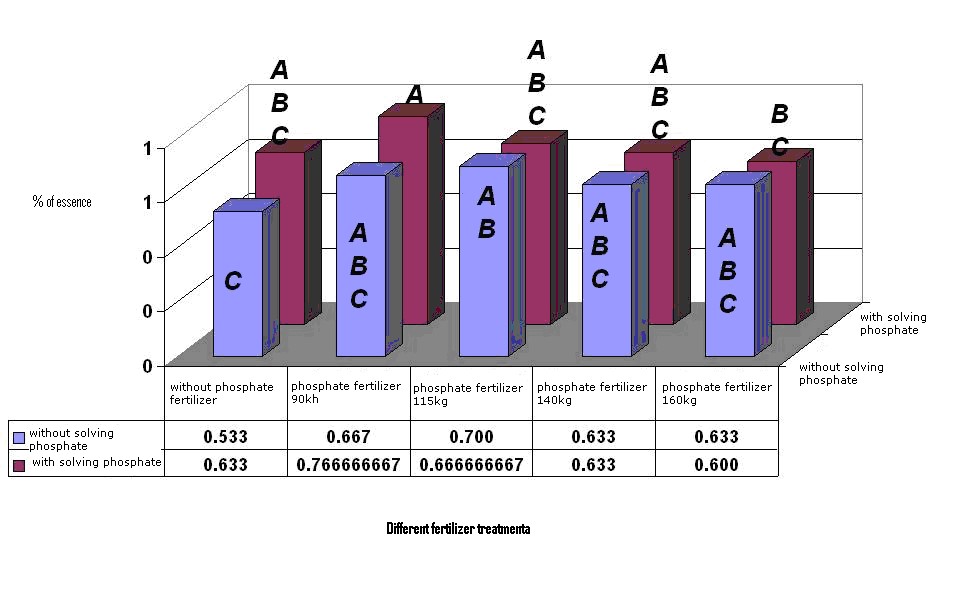
Figure 2: Comparing the average performance of the essence percentage in different treatments of Hyssop
FIGURE 3
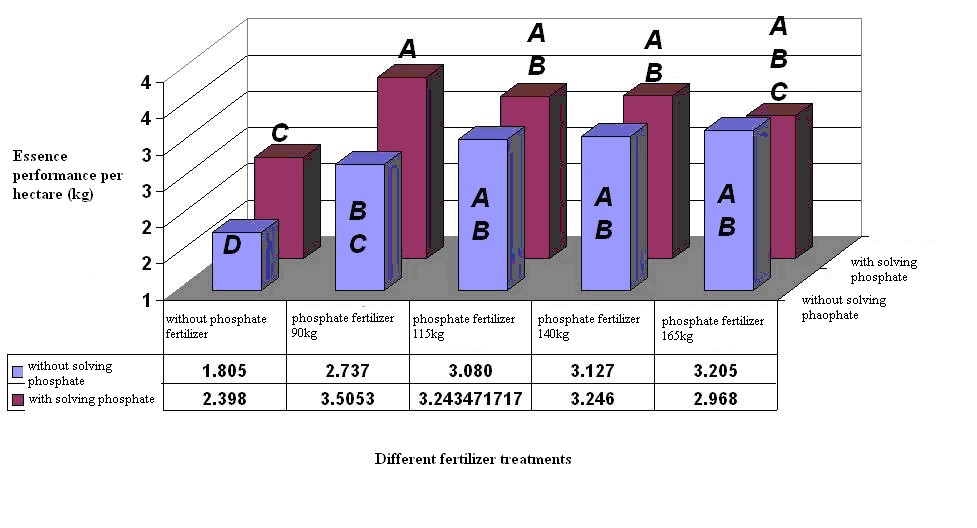
Figure 3: Comparing the average performance of the essence in different treatments of Hyssop
FIGURE 4
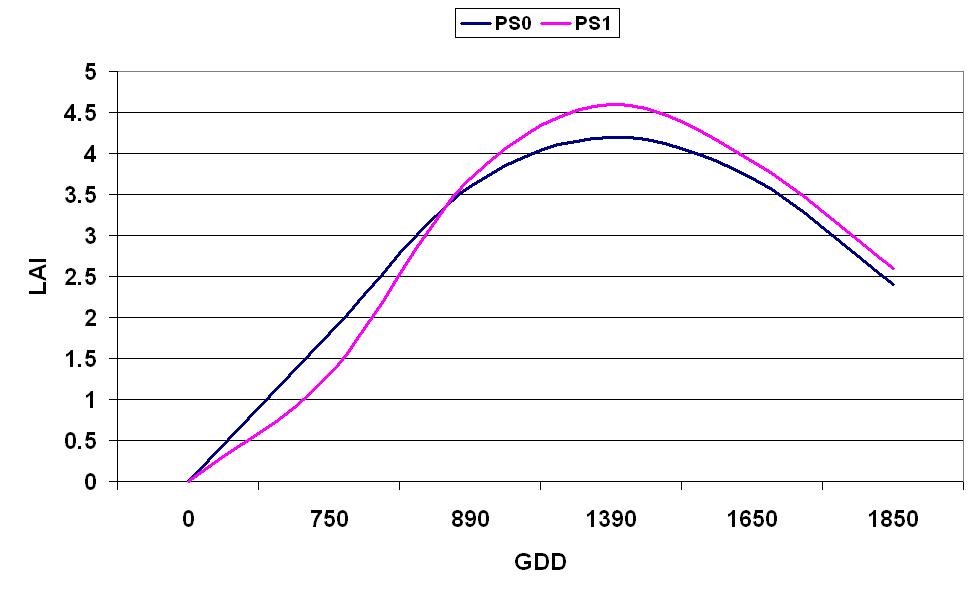
Figure 4: Change process of the index of leave surface in application or non-application of the organic fertilizer on Hyssop
FIGURE 5
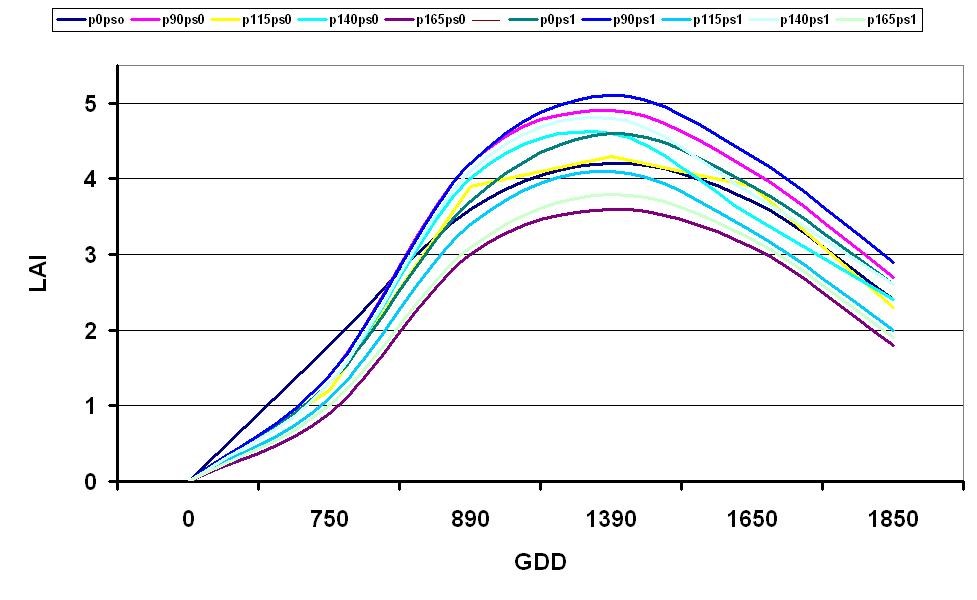
Figure 5: Change process of the index of leave surface in application or non-application of the organic fertilizer on Hyssop
Tables at a glance
Figures at a glance